

how to find pupillary distance
As the name implies, pupillary distance is a measurement of the space between the centers of your eyes. It's crucial, as it helps professionals ensure that your glasses refract light properly and amend your troublesome vision.
During an optical exam, doctors take many pupil measurements. They do not, however, always measure your pupillary distance. You might have to pay more for this small test, and you might have to go to an optician (not an ophthalmologist) to get the results.
Some people believe doctors will not give you the measurement to save money. That is just not true. The measurement isn't considered to be clinically significant.
If you do not want to sit for a second fitting exam, you can attempt to grab the data on your own at home. But it's difficult to get the measurement just right.
What Is Pupillary Distance?

If you are asked, you can probably cite your height, weight, shoe size, and waist measurement. But you may not know how far apart your pupils are from one another.
Your pupillary distance (PD) is a measurement between the center of one pupil and the center of the other. It's a small number, but it's a critical one for people who wear glasses.
As you probably know, your glasses contain two lenses held together by a stiff frame that sits on your nose. Your PD helps the lens-crafting company to cut the lenses just right, so they sit within the frames properly.
As the National Eye Institute explains, glasses work by bending the light that enters your eye. There are multiple types of glasses, including:
- Reading glasses. These lenses help people with aging eyes to see items clearly, even when they are held close to the face.
- Single-vision prescription glasses. The lenses in these items help to correct nearsightedness or farsightedness.
- Multifocal prescription glasses. The lenses in these products can correct both nearsightedness and farsightedness.
Glasses are precise tools, and prescription versions rely on delicate measurements. If something is not quite right, the light will not move as it should. That can lead to:
- Blurred vision.
- Double vision.
- Headaches.
- Nausea.
You may not notice the problem right away. But as you continue to wear ill-fitting glasses, the issue may become painfully obvious. Your eyes are not harmed by lenses that do not fit your eyes. But if you can't see without discomfort, it's hard to handle everyday tasks.
Measuring Your Pupillary Distance
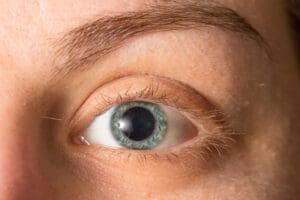
During an optometric exam, you will undergo many measurements. Some of them involve your pupils. But not all eye doctors will measure your pupillary distance during an exam.
Many pupil measurements are critical to eye health. The American Academy of Ophthalmology explains that your doctor will:
- Examine your pupils in a bright room. Your doctor will measure how big your pupils are both in natural light and when a light is shined into your eyes. Your doctor will ensure that your eyes constrict and that both eyes work in the same way.
- Examine your pupils in a dark room. Your doctor will look at your eyes while you are sitting in low light. Your doctor may measure how big your pupils are and compare those readings to anatomical charts.
If your pupils are large and wide, you could encounter difficulties with glare and halos after refractive surgery. If you are planning for surgery, this test is important. But your doctor may also take measurements to check on the health of your eye.
Your pupillary distance is not considered clinically significant, says the Alberta Association of Optometrists. Your eyes do not move farther apart as you age, and no diseases are marked by widening pupils. There is no reason for your doctor to check on your pupil width every year, and since it's not part of your routine care, your doctor may not keep a record of your measurement.
Can You Measure PD Yourself?

Opticians and other professionals who prepare your eyeglasses measure your PD. Typically, that is included as part of your glasses-ordering process. While you can measure it yourself, that comes with some risks.
Some conspiracy theorists suggest that doctors will not give you your pupillary distance from your record to trap you into buying glasses in the office. This is not true. Your doctor may not have this measurement unless you've sat for glasses in the past.
You can measure your own pupils, but as experts point out, it can be a tricky business. To do it right, you will need to:
- Find the center of your pupil. If you are in a bright room and your pupils are very small, this might be easy. But if your pupils are dark and wide, it can be difficult to pinpoint the absolute center.
- Find the right ruler. Pupillary distance is typically measured in millimeters. But you will need a ruler that has clear demarcations that you can read, even as you hold it to your face.
- Hold very still. Even a tiny shift could render your measurement inaccurate, and that could make your entire glasses prescription moot.
A visit to the optician can get you the precise measurement you need. You usually need an appointment to get it, and you need to pay a fee. You could also ask your doctor to measure your PD when you sit for your next exam, so you will have the number when you need it.
If you do not need glasses, there is no reason to worry about what your pupillary distance is and how it works. But if you are hoping to lean on glasses to help you see clearly, it pays to ensure you have the right data at the right time.
References
Eyeglasses for Refractive Errors. (July 2019). National Eye Institute.
Headaches and Fatigue: Measure Your Pupillary Distance. (October 2015). Endmyopia.
Pupillary Examination. American Academy of Ophthalmology.
PD Measurement. Alberta Association of Optometrists.
What Your Optometrist Doesn't Want You to Know. (March 2017). Boston Globe.
Pupillary Distance Self-Measurement. Open Oregon.
The information provided on this page should not be used in place of information provided by a doctor or specialist. To learn more, read our Privacy Policy and Editorial Policy pages.
Schedule Your
Free LASIK
Consult Today!
Take the first step toward better vision by booking an appointment and learn if Lasik is right for you.
Schedule an Exam!
how to find pupillary distance
Source: https://www.nvisioncenters.com/glasses/measure-pupillary-distance/
Posted by: williamsyoughought.blogspot.com
0 Response to "how to find pupillary distance"
Post a Comment