

How To Get X Out Of The Denominator
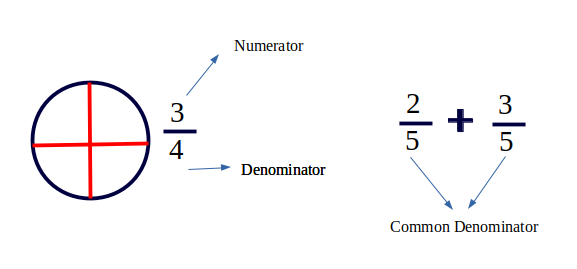
The lowest Common Denominator or Least Common Denominator is the Least Common Multiple of the denominators of a set of fractions.
Attention reader! Don't stop learning now. Get hold of all the important mathematical concepts for competitive programming with the Essential Maths for CP Course at a student-friendly price. To complete your preparation from learning a language to DS Algo and many more, please refer Complete Interview Preparation Course .
Common denominator : when the denominators of two or more fractions are the same.
Least Common denominator is the smallest of all common denominators.
Why do we need LCD ?
It simplifies addition, subtraction and comparing fraction.
Common Denominator can be simply evaluated by multiplying the denominators. In this case, 3 * 6 = 18
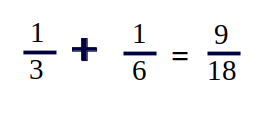
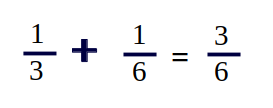
But that may not always be least common denominator, as in this case LCD = 6 and not 18. LCD is actually LCM of denominators.
Examples :
LCD for fractions 5/12 and 7/15 is 60. We can write both fractions as 25/60 and 28/60 so that they can be added and subtracted easily. LCD for fractions 1/3 and 4/7 is 21.
Example Problem : Given two fractions, find their sum using least common dominator.
Examples:
Input : 1/6 + 7/15 Output : 19/30 Explanation : LCM of 6 and 15 is 30. So, 5/30 + 14/30 = 19/30 Input : 1/3 + 1/6 Output : 3/6 Explanation : LCM of 3 and 6 is 6. So, 2/6 + 1/6 = 3/6
Note* These answers can be further simplified by Anomalous cancellation.
C++
#include <iostream>
using namespace std;
int gcd( int a, int b)
{
if (a == 0)
return b;
return gcd(b % a, a);
}
int lcm( int a, int b)
{
return (a * b) / gcd(a, b);
}
void printSum( int num1, int den1,
int num2, int den2)
{
int lcd = lcm(den1, den2);
num1 *= (lcd / den1);
num2 *= (lcd / den2);
int res_num = num1 + num2;
cout << res_num << "/" << lcd;
}
int main()
{
int num1 = 1, den1 = 6;
int num2 = 7, den2 = 15;
printSum(num1, den1, num2, den2);
return 0;
}
Java
public class GFG {
static int gcd( int a, int b)
{
if (a == 0 )
return b;
return gcd(b % a, a);
}
static int lcm( int a, int b)
{
return (a * b) / gcd(a, b);
}
static void printSum( int num1, int den1,
int num2, int den2)
{
int lcd = lcm(den1, den2);
num1 *= (lcd / den1);
num2 *= (lcd / den2);
int res_num = num1 + num2;
System.out.print( res_num + "/" + lcd);
}
public static void main(String args[])
{
int num1 = 1 , den1 = 6 ;
int num2 = 7 , den2 = 15 ;
printSum(num1, den1, num2, den2);
}
}
Python3
def gcd(a, b):
if (a = = 0 ):
return b
return gcd(b % a, a)
def lcm(a, b):
return (a * b) / gcd(a, b)
def printSum(num1, den1,
num2, den2):
lcd = lcm(den1, den2);
num1 * = (lcd / den1)
num2 * = (lcd / den2)
res_num = num1 + num2;
print ( int (res_num) , "/" ,
int (lcd))
num1 = 1
den1 = 6
num2 = 7
den2 = 15
printSum(num1, den1, num2, den2);
C#
using System;
class GFG {
static int gcd( int a, int b)
{
if (a == 0)
return b;
return gcd(b % a, a);
}
static int lcm( int a, int b)
{
return (a * b) / gcd(a, b);
}
static void printSum( int num1, int den1,
int num2, int den2)
{
int lcd = lcm(den1, den2);
num1 *= (lcd / den1);
num2 *= (lcd / den2);
int res_num = num1 + num2;
Console.Write( res_num + "/" + lcd);
}
public static void Main ()
{
int num1 = 1, den1 = 6;
int num2 = 7, den2 = 15;
printSum(num1, den1, num2, den2);
}
}
PHP
<?php
function gcd( $a , $b )
{
if ( $a == 0)
return $b ;
return gcd( $b % $a , $a );
}
function lcm( $a , $b )
{
return ( $a * $b ) / gcd( $a , $b );
}
function printSum( $num1 , $den1 ,
$num2 , $den2 )
{
$lcd = lcm( $den1 , $den2 );
$num1 *= ( $lcd / $den1 );
$num2 *= ( $lcd / $den2 );
$res_num = $num1 + $num2 ;
echo $res_num . "/" . $lcd ;
}
$num1 = 1;
$den1 = 6;
$num2 = 7;
$den2 = 15;
printSum( $num1 , $den1 , $num2 , $den2 );
?>
Javascript
<script>
function gcd(a , b)
{
if (a == 0)
return b;
return gcd(b % a, a);
}
function lcm(a , b)
{
return (a * b) / gcd(a, b);
}
function printSum(num1 , den1 , num2 , den2)
{
var lcd = lcm(den1, den2);
num1 *= (lcd / den1);
num2 *= (lcd / den2);
var res_num = num1 + num2;
document.write(res_num + "/" + lcd);
}
var num1 = 1, den1 = 6;
var num2 = 7, den2 = 15;
printSum(num1, den1, num2, den2);
</script>
Output :
19/30
This article is contributed by Shubham Rana. If you like GeeksforGeeks and would like to contribute, you can also write an article using contribute.geeksforgeeks.org or mail your article to contribute@geeksforgeeks.org. See your article appearing on the GeeksforGeeks main page and help other Geeks.
Please write comments if you find anything incorrect, or you want to share more information about the topic discussed above.
How To Get X Out Of The Denominator
Source: https://www.geeksforgeeks.org/least-common-denominator-lcd/
Posted by: williamsyoughought.blogspot.com
0 Response to "How To Get X Out Of The Denominator"
Post a Comment